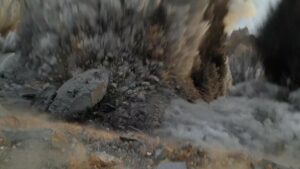
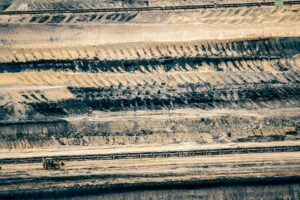
The use of stemming plugs for the optimisation of blast performance is gaining popularity in the mining industry. This is mainly as a result of stemming plugs’ abilities to enhance energy retention and reduce the environmental impacts (noise, vibration, airblast and flyrock) associated with blasting. The main objective of the Master’s research study by Mushwana (2025) at the University of South Africa (UNISA) was to assess the potential of stemming plugs in reducing air blast at a test site – TM Quarry. The stemming plugs commercially known as Varistem® of diameter 102 mm were used for onsite testing during the study.
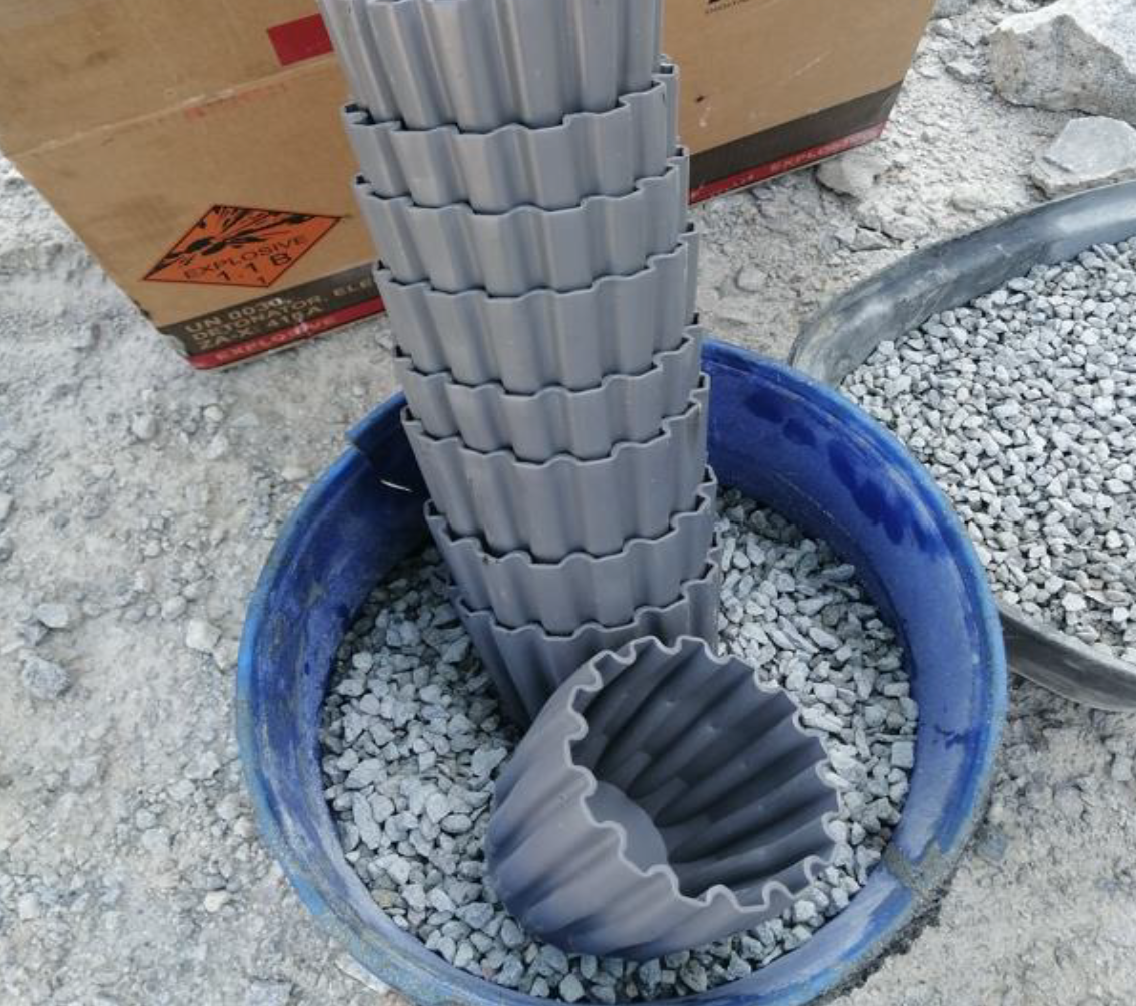
Figure 1: Varistem BP4 Stemming Plugs on the Test Site (Mushwana, 2025)
Test setup
A total of 27 blasts were carried during the study. 15 blasts incorporated the Varistem® stemming plugs with aggregates while the remaining 12 were conducted using standard stemming with aggregates only. For the 27 blasts all Quarry TM design parameters (refer to Table 1 for details) and conditions were similar except for the stemming length that was varied between 1.9m and 3.0m.
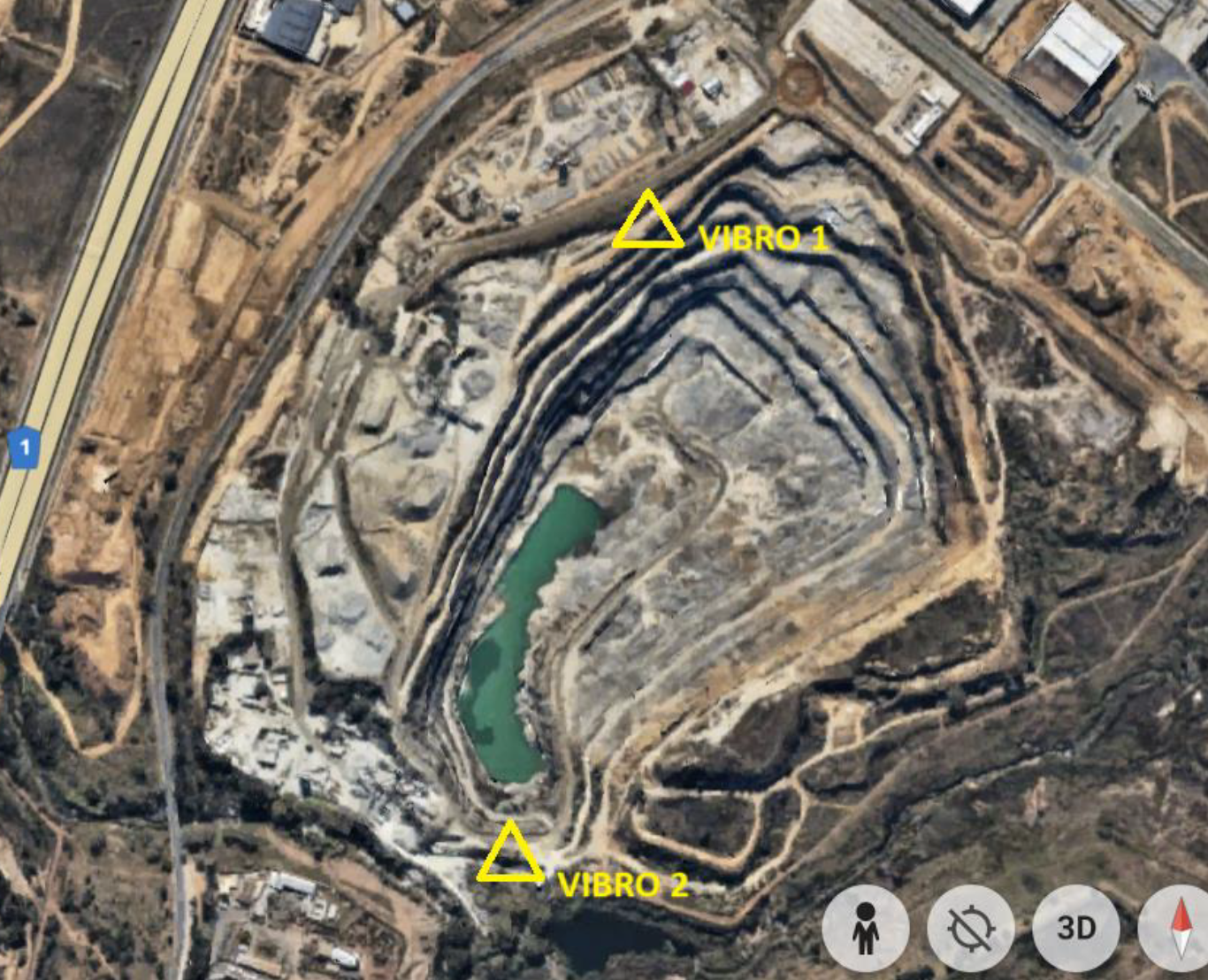
The resultant air blast levels were recorded for the 27 blasts from two different monitoring stations around the pit. Station A was approximately 100 m away from the blast benches while Station B was approximately 700 m away. Figure 2 shows an aerial view of Quarry TM as well as the relative locations of Station A and Station B.
Figure 2: Aerial view of Quarry TM & Location of Airblast Monitoring Stations (Mushwana, 2025)
Results
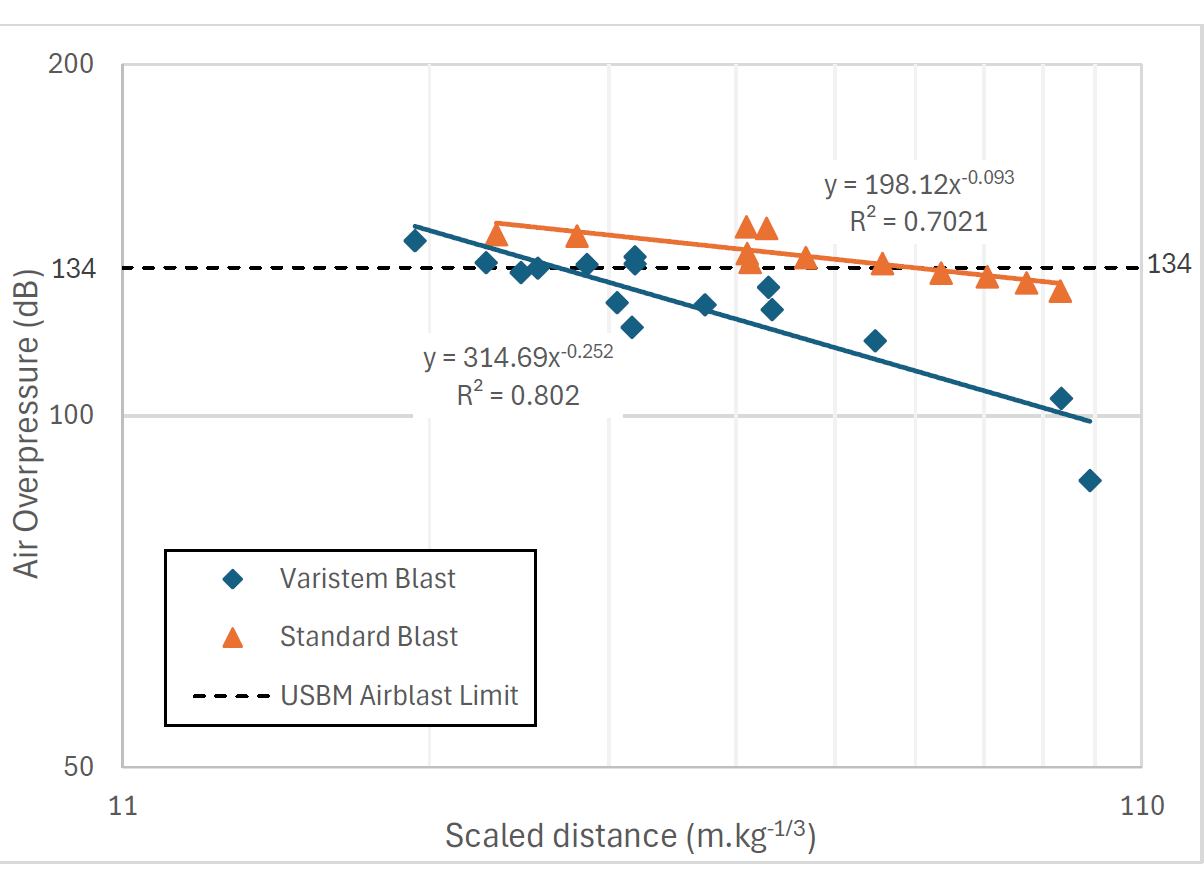
Results from Station A showed that only 33% of the Varistem® blasts exceeded the regulatory threshold limit of 134 dB set by the United States Bureau of Mines (USBM), in contrast to 67% of the standard blasts exceeding the regulatory threshold limit (an improvement of more than two times). The results from Station A are plotted in Figure 3.
Figure 3: Air Overpressure Levels Measured at Station A (Mushwana, 2025)
Taking into account the use of scaled distance to compare airblast levels at different distances, Figure 3 reveals a general trend of significantly lower airblast levels with Varistem®. The Varistem® stemming plugs were found to have reduced air blast sample mean by 9.35% at Station A.
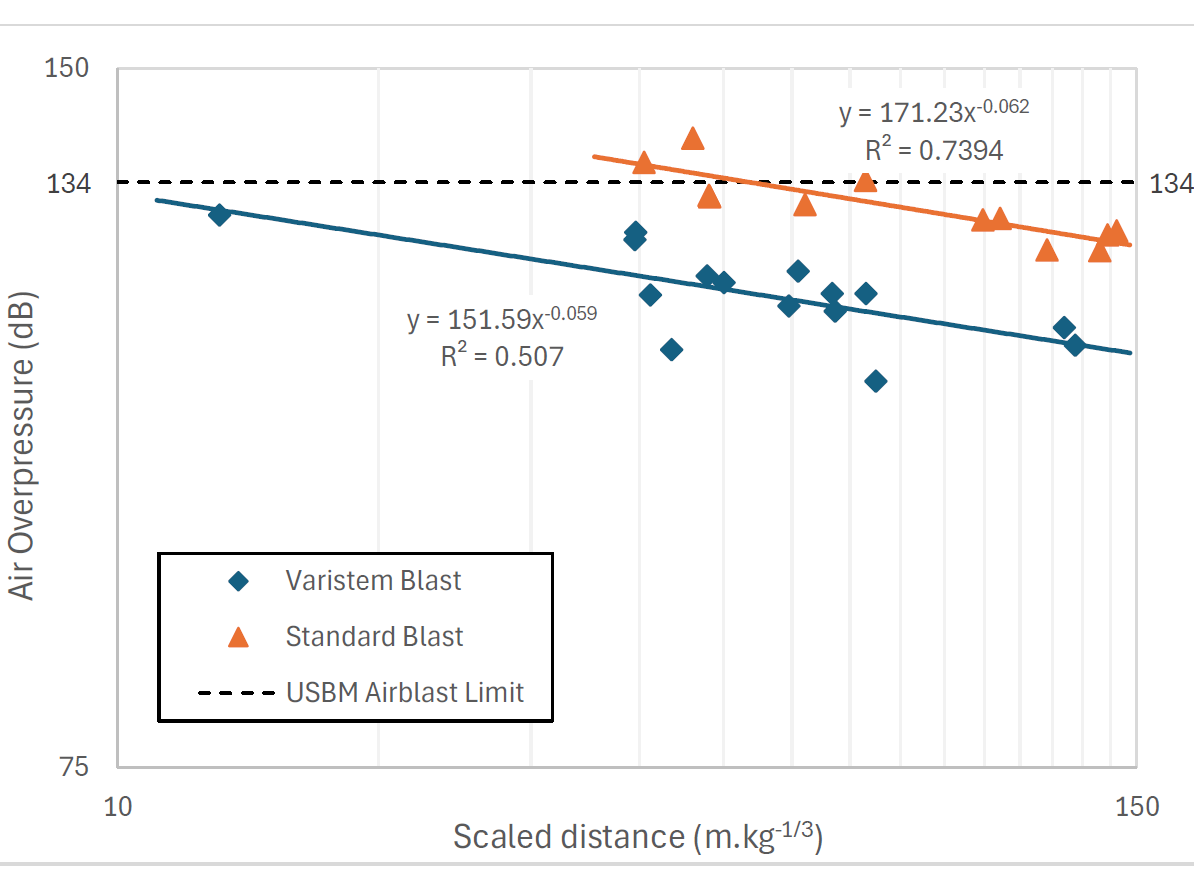
Results from Station B showed that 0% of the Varistem® blasts exceeded the regulatory threshold limit of 134 dB set by the USBM, in contrast to 25% of the standard blasts exceeding the regulatory threshold limit. The results from Station B are plotted in Figure 4.
Figure 4: Air Overpressure Levels Measured at Station B (Mushwana, 2025)
Taking into account the use of scaled distance to compare airblast levels at different distances, Figure 4 repeats the same general trend of significantly lower airblast levels with Varistem®. The Varistem® stemming plugs were found to have reduced air blast sample mean by 9.08% at Station B.
Mushwana (2025) also calculated the scaled depth of burial (SDoB) to estimate the relative level of blast energy containment. The SDoB calculations revealed that all Varistem® blasts were within the controlled energy range, explaining why acceptable air blast levels were produced. Lastly, the empirical model by the USBM was found to describe the air blast of the quarry better than McKenzie’s model. In essence, the results produced from this study showed that the Varistem® stemming plugs are doing some work in reducing blast induced air blast compared to standard stemming methods.
Conclusions
The main conclusions from the study was as follows (Mushwana, 2025):
The Varistem® stemming plugs were found to have reduced air blast sample mean by 9.35% at Station A and by 9.08% at Station B.
A further analysis of the results captured at Station A showed that 5 out of the 15 blasts tested using the Varistem® plugs were above the regulatory air blast limit of 134 dB as set by the United States Bureau of Mines (USBM). This means 33% of the recorded Varistem® blasts were above limit. When compared with the standard blasts at the same station, it was found that 67% of the recorded air blast levels for the standard blasts were above limit.
In addition to this, the air blast levels recorded at Station B showed that all the Varistem® data points were below 134 dB. This means, low levels of noise and irritation were produced by the Varistem® blasts at this station. On the other hand, 25% of the recorded standard blasts were found to lie above the 134-dB threshold. According to USBM guidelines, air overpressure levels above 134 dB may cause damage to nearby infrastructures. Therefore, a notable improvement in using the Varistem® plugs was evident at Station B where all the recorded blasts were within acceptable regulatory limits.
Furthermore, this study highlighted the fact that air blast decreases with an increase in monitoring distance. It was determined that the air overpressure recorded at Station B, which was the farthest away, was not greater than that measured near the source, i.e., around Station B.
In terms of energy containment, calculations showed the corresponding scaled depths of burial ranged between 1.13 to 1.37 m.kg-1/3 for all 15 Varistem® blasts. This range of calculated values confirmed that Varistem® blasts produced controlled energy as it fell between 0.92 to 1.40 m.kg-1/3. This controlled energy range means that the blasts were able to yield good fragmentation, high rock fracturing in collar zone, adequate air blast and ground vibration, as well as excellent heave and muck pile mound.
The study further confirmed that the stemming plugs are contributing to reducing air blast at a 95% confidence level. In simple terms, this means that the Varistem® plugs are playing a major role in controlling air blast at TM Quarry.
References
Mushwana, T. 2025. “APPLICATION OF STEMMING PLUGS FOR THE REDUCTION OF AIR BLAST INDUCED DURING SURFACE MINE BLASTING”. Submitted in accordance with the requirements for the degree of Master of Engineering at the University of South Africa (UNISA). Accessed online.
This article delves into the causes, effects, and mitigation measures related to flyrock incidents. It emphasises the importance of understanding mechanisms like face bursting, cratering,
Introduction As part of continuous improvement efforts to optimise blasting performance and enhance safety at Gold Operation X, engineering trials were designed to trial the